David Wolf · Project Use Case
AI SECURITY · PRODUCT SECURITY · AI SECURITY LLC
AI Security LLC
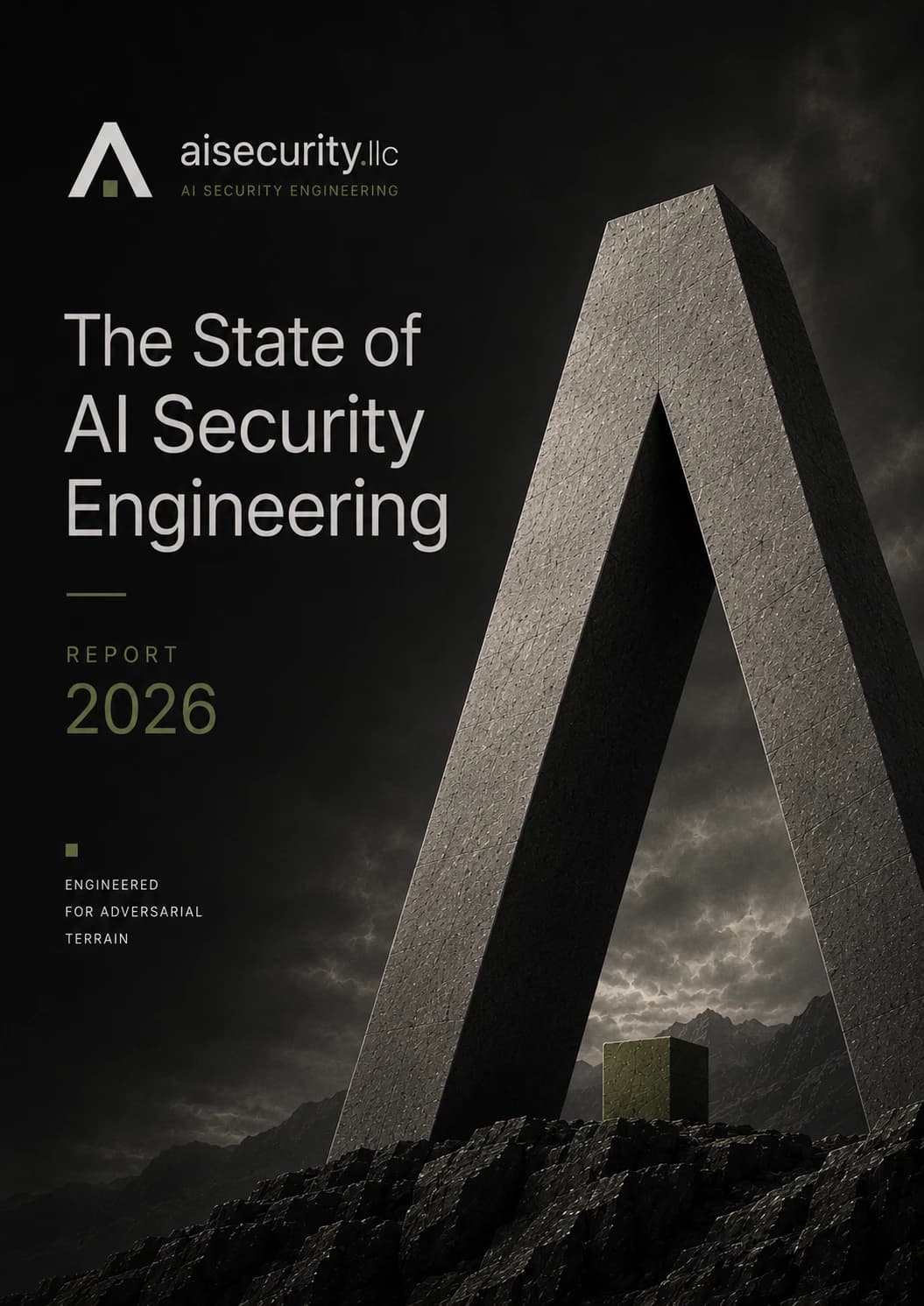
The State of AI Security Engineering Report 2026
A flagship research report turning AI security job-market noise into evidence about roles, skills, control gaps, hiring signals, and the emerging AI...
Designed and authored a flagship 2026 research report on AI security engineering, using a corpus of AI and security job descriptions, role analysis, market signals, practitioner framing, and AI governance research to explain how...
Client
AI Security LLC / Independent Research
Engagement Type
Research Product
Period
2026
Role
Author / Research Lead / AI Security Engineer
Focus Areas
AI Security Engineering, AI Security Labor Market, Job Description Analysis, Role Taxonomy
The Research Narrative
Strategic Problem
The report's challenge is to separate signal from noise. Some roles genuinely require new AI security capabilities. Others are traditional security roles with AI branding. The research needed to expose that...
What David Did
David structured the report around job-description evidence, capability clusters, role-market patterns, and practical operating implications. The analysis compares AI+Security roles...
What Became Clearer
The result is a flagship research asset for AI Security LLC. It gives the portfolio a sharper public thesis: AI security engineering is not a buzzword, but an emerging discipline with...
Consulting Proof
This is evidence of turning messy security telemetry into explainable dashboards, alert-quality improvements, and executive-ready operating views.
The Context
AI security engineering is becoming a visible hiring category before the industry has agreed on what the role actually means. Job descriptions often combine product security, AppSec, governance, model safety, detection engineering, privacy, cloud, and platform security into one overloaded specification.
The Challenge
The report's challenge is to separate signal from noise. Some roles genuinely require new AI security capabilities. Others are traditional security roles with AI branding. The research needed to expose that difference and explain what organizations actually need to build.
What I Did
David structured the report around job-description evidence, capability clusters, role-market patterns, and practical operating implications. The analysis compares AI+Security roles against Product Security and AppSec baselines to identify which expectations are new, inflated, missing, or operationally meaningful.
- •Defined AI security engineering as an emerging discipline at the intersection of product security, AppSec, AI governance, platform security, model evaluation, privacy, detection engineering, and secure SDLC
- •Analyzed AI and security job-description patterns to distinguish real skill demand from vague AI branding
- •Created role-market framing around the Frankenstein Role, Chimera Spec, Unicorn Index, Skill Washing, Evidence Gap, Probability Pivot, Agentic Anarchy, Governance Evidence, and Signal over Noise
- •Compared AI-security role expectations against Product Security and AppSec baselines to identify which requirements are genuinely new
- •Mapped recurring skills into capability clusters: AI product security, LLM application security, governance, secure SDLC, detection, cloud, privacy, model evaluation, and agentic workflow security
- •Separated strategic executive claims from backlog-level implementation work
- •Identified gaps between what organizations say they need and what their job descriptions prove they can operationalize
- •Developed narrative sections suitable for CISOs, hiring managers, recruiters, candidates, consulting buyers, and sponsors
The Outcome
The result is a flagship research asset for AI Security LLC. It gives the portfolio a sharper public thesis: AI security engineering is not a buzzword, but an emerging discipline with specific product, governance, evaluation, authorization, and evidence responsibilities.
Research Outcomes
Signal Quality
Improved the trustworthiness of operational security signals
Operational Clarity
Translated complex security data into clearer operating views
Executive Visibility
Built dashboards leaders could trust for decision-making
Operational Impact
Turned raw telemetry into actionable security intelligence
Capabilities Demonstrated
Executive Reporting
Security data translated for leadership
Security Analytics
Signal investigation and event analysis
IAM / Access Control
Identity telemetry and access insights
SIEM Alert Debugging
Noise reduction and signal validation
Dashboard Development
Operational and executive views
Telemetry Normalization
Consistent and trusted data
Operational Reporting
Actionable views for security operations
Public-Safe Evidence
Shareable insights without sensitive data
Key Deliverables
- •The State of AI Security Engineering Report 2026
- •AI security role-market analysis
- •AI security engineering capability taxonomy
- •Job-description corpus analysis model
- •Product Security and AppSec baseline comparison
- •Role-market narrative concepts
- •CISO and hiring-manager briefing material
- •Recruiter and candidate-facing insights
Tools & Technologies
Consulting Translation
The reusable pattern is not Disney-specific: normalize fragmented security telemetry, debug low-signal alert behavior, build trusted operating views, and give leadership evidence they can act on without exposing sensitive systems.
Relevant current offers
Portfolio work demonstrates the skills behind these active engagements. Public-safe summaries only — this case study does not imply any ongoing customer relationship or endorsement.
AI Launch Security Review
5–10 business day first engagement. AI surface map, abuse path testing, evidence pack.
AI Product Security Assessment
2–4 week structured review of AI product features, RAG, agents, and data flows.
Start No-Cost Scoping
Not sure which path fits? Get matched to the right engagement before any commitment.