

NEW

SecEng Program Blueprint Kit turns 7 blueprints and 294 control mappings into Jira, Confluence, Linear, Notion, Asana, and GitHub-ready work

AI Security Engineering

Map, attack, defend, and prove your AI systemsbefore enterprise scrutiny finds the gaps.

We help teams secure LLM apps, RAG systems, agents, copilots, and AI workflows before buyers, attackers, or auditors expose the weak points.

One operating method across red-team validation, blue-team hardening, and governance evidence — scoped for teams shipping real AI products and agentic workflows.

Map: AI surfaces & trust boundariesAttack: red-team validationDefend: blue-team hardeningProve: governance evidence

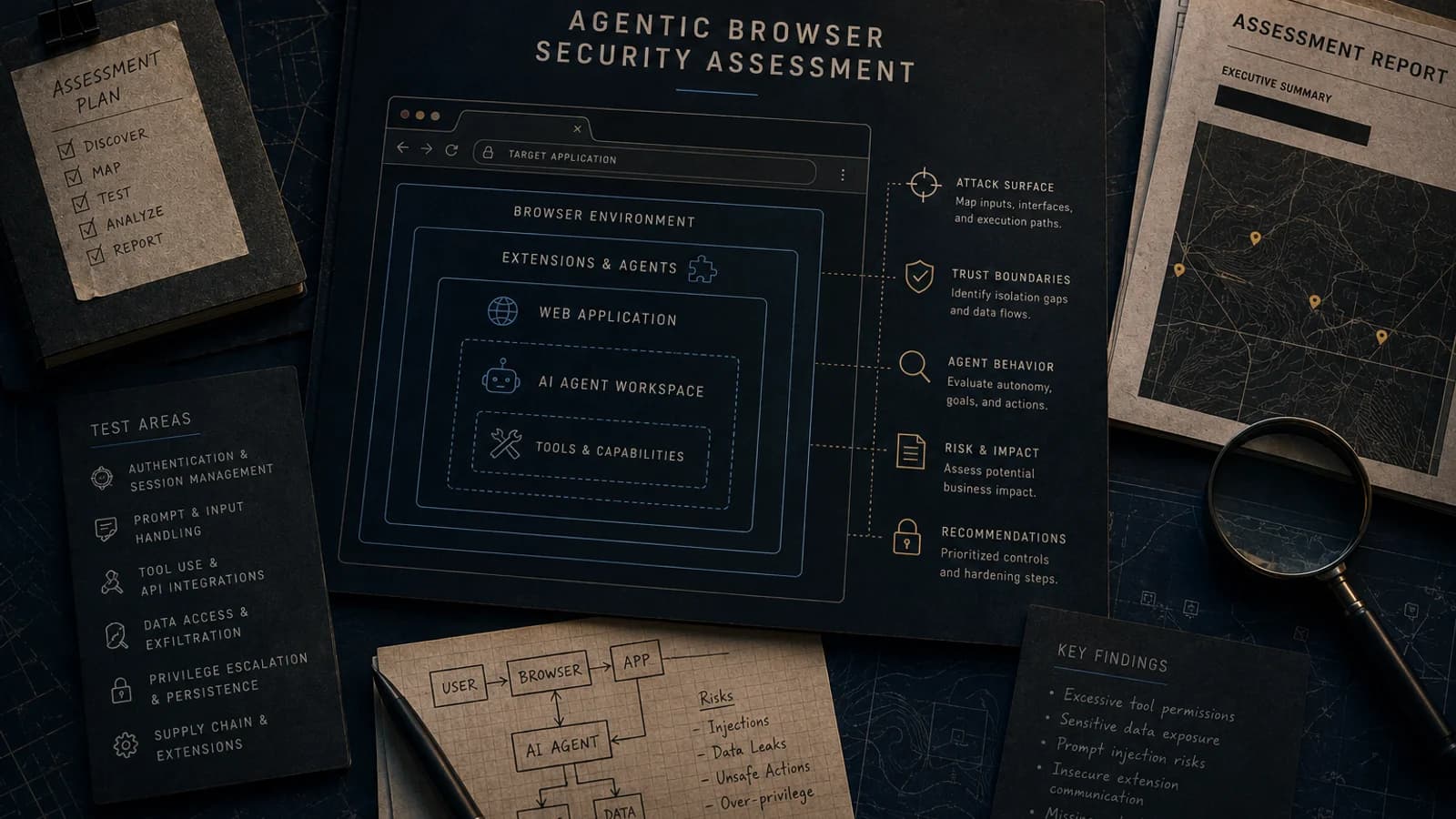
Scoped review, red-team sprint, hardening plan, or evidence pack — clear findings and prioritized next steps.

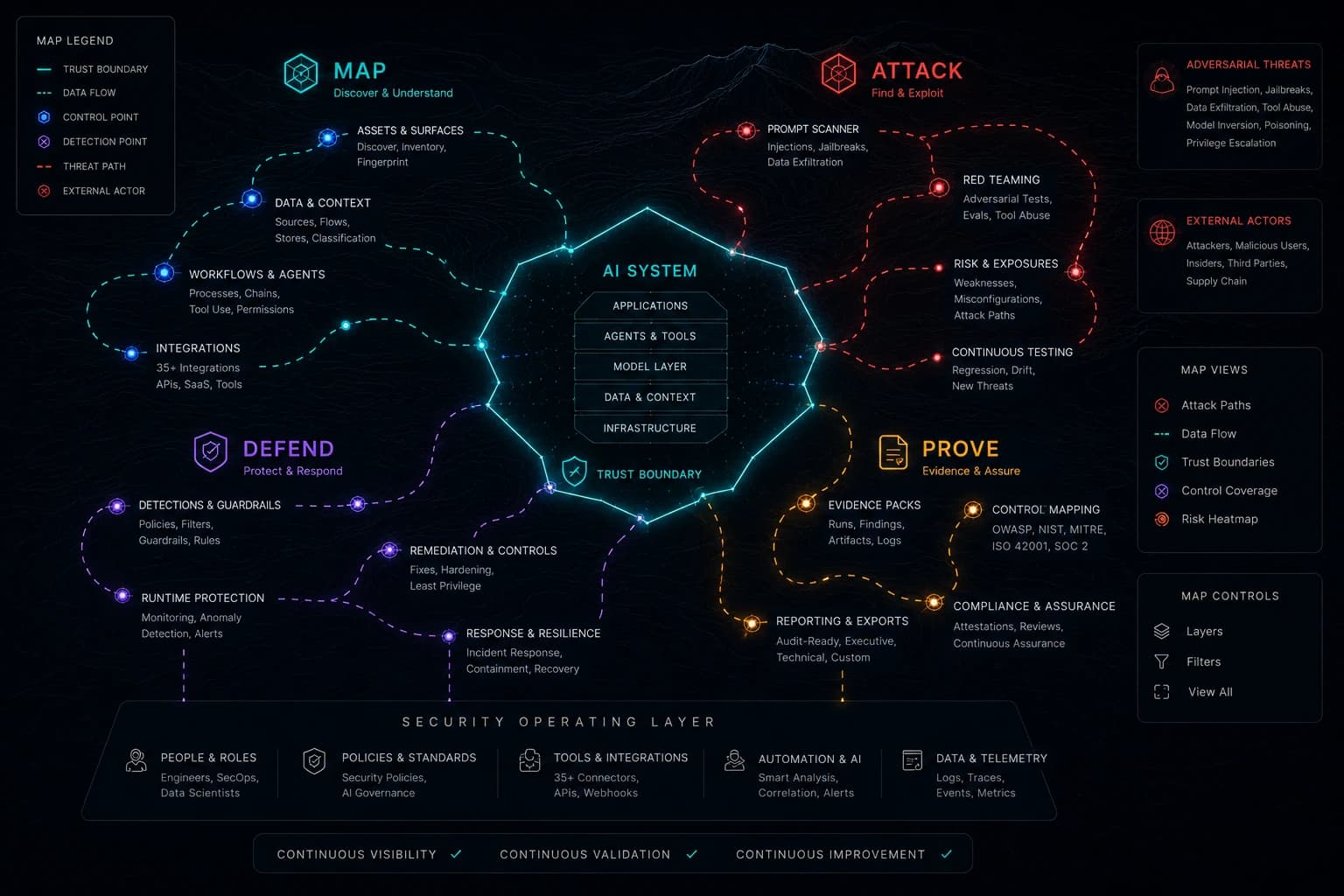
AI security architecture — adversarial terrain
15+
Years in AI security, AppSec & enterprise
57
Public case studies
60+
Portfolio proofs

Experience across

Splunk, Forescout, Devo, Cornerstone, Unum, Disney, Defence & more

What is blocking you?

Pick the pressure. We'll route it to the right service mode.

The same method runs through every engagement: map the system, attack the weak points, defend the release path, and prove the controls. The service mode changes based on your pressure: red team, blue team, governance, or a scoped diagnostic.

Shipping an AI feature

Map + Attack · Product Security / Red Team

LLMs, RAG, copilots, agents, or AI workflows are heading toward launch.

Agents can take actions

Map + Defend · Blue Team / Agentic Hardening

Tool use, delegated authority, approvals, and rollback paths need explicit boundaries.

Enterprise buyers are asking questions

Prove · Governance Evidence

Procurement, trust, and security review need buyer-ready evidence.

Governance is still policy, not operations

Defend + Prove · Governance Operating Model

Convert AI governance into ownership, intake, review gates, and evidence lifecycle.

Not sure yet

Map · Diagnostic

Start with a short diagnostic and route into the right red-team, blue-team, or governance engagement.

Service modes

One method. Three service modes.

Map. Attack. Defend. Prove. is the lifecycle. Red Team, Blue Team, and Governance are the ways buyers usually enter the work.

Red Team

Attack what can fail.

Adversarial testing for prompts, RAG, agents, tools, workflows, retrieval, memory, and unsafe actions.

Maps to: Map + Attack

Blue Team

Harden what must ship.

Controls, permission boundaries, detections, telemetry, approval gates, eval gates, and release criteria.

Maps to: Defend

Governance

Prove what is controlled.

Evidence packs, control ownership, framework mappings, buyer answers, audit trails, and operating-model artifacts.

Maps to: Prove

Diagnostic

Find the right path.

A short scoping review that maps the AI surface and routes into red-team, blue-team, or governance work.

Maps to: Map

What adversarial terrain actually means

AI systems do not operate in clean diagrams. They operate across users, prompts, files, agents, tools, APIs, retrieval layers, model providers, business workflows, logs, and compliance obligations. Every boundary becomes a security question: who can instruct the system, what can it access, what can it change, what can it leak, and what evidence proves the controls are working?

Hostile Inputs

Prompt injection, jailbreaks, malicious documents, poisoned retrieval, indirect instructions, and user-controlled context at every layer.

Excessive Agency

Agents, tools, workflows, automations, plugins, broad permissions, and unsafe action paths that operate beyond intended boundaries.

Data & Authorization

RAG boundaries, tenant isolation, sensitive data exposure, context leakage, identity propagation, and policy enforcement at retrieval time.

Evidence Pressure

SOC 2, ISO 27001, ISO 42001, NIST AI RMF, EU AI Act readiness, customer questionnaires, audit trails, and executive reporting.

Services

Red-team, blue-team, and governance engagements for AI systems under scrutiny

Every engagement follows the same lifecycle: map the system, attack the weak points, defend the release path, and prove the controls. The offer changes based on whether you need validation, hardening, evidence, or operating-model design.

Workbench-backed delivery

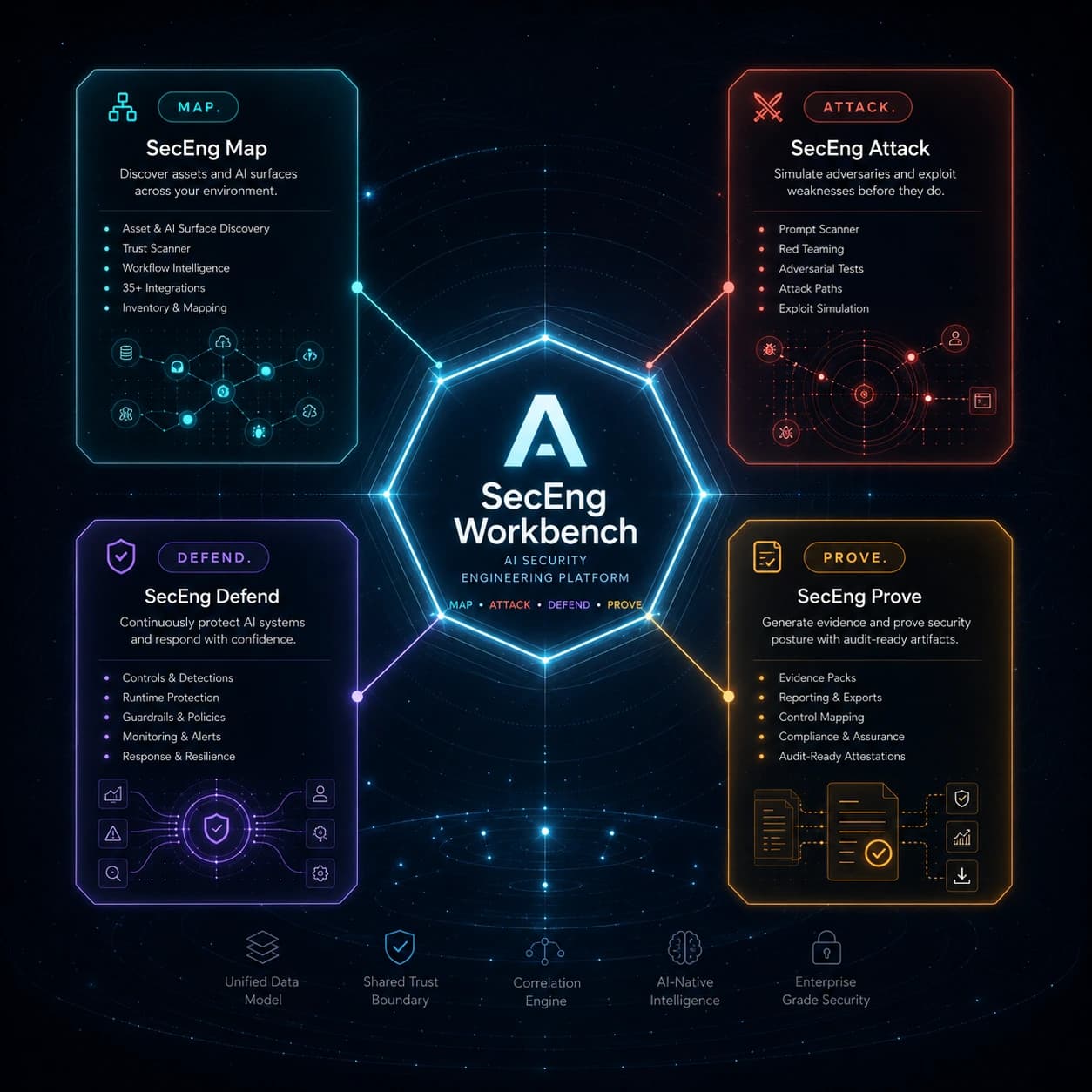
SecEng Workbench — the delivery system behind every engagement

SecEng Workbench is the tool-backed delivery system we use during AI security engagements. It helps us map AI systems, run adversarial scenarios, harden release paths, and produce evidence buyers, auditors, and security teams can actually use.

SecEng Threat Canvas live demo

Where are the trust boundaries?

SecEng Threat Canvas

Operating method

From red-team finding to blue-team control to governance evidence

The work is not finished when a risk is named. It is finished when the system has been mapped, attacked, defended, and proven with evidence a security, product, and governance team can maintain.

01

Map

Diagnostic / scoping

Inventory AI features, data flows, model/provider dependencies, tools, agents, trust boundaries, users, tenants, and business workflows.

02

Attack

Red Team

Run adversarial testing against prompts, documents, retrieval, tools, authorization, memory, workflows, and unsafe actions.

03

Defend

Blue Team

Design controls, detection requirements, logging, evaluation gates, permission boundaries, and secure patterns.

04

Evidence

Governance Evidence

Map controls to frameworks, package ownership and approval gates, produce findings, remediation backlogs, and customer-ready evidence artifacts.

Consultant roster

Specialists for scoped AI security missions.

Bring in focused expertise for product security, AI red teaming, governance evidence, incident-informed research, detection engineering, architecture review, and commercial strategy.

Roster members are independent specialists. Availability, scope, billing, and client relationships are handled per mission.

Portrait of David Wolf
David Wolf

Senior AI Security Engineer

Builds operating models, controls, detection, and evidence layers for enterprise AI adoption.

David translates AI risk, data governance, product security, and security architecture into practical advisory work, scorecards, and evidence-backed programs.

FOCUS

AI Security EngineeringResearch & AnalysisTechnical Delivery & Architecture

SERVICES

AI Product Security AssessmentAI Red Team ValidationAgentic Workflow HardeningAI Security Operating Model

AVAILABILITY

Available
Portrait of Alex Eisen
Alex Eisen

Senior Security Leader / Vulnerability Research & Incident Response Advisor

Leads vulnerability research, incident response, product security, and AI risk management work.

Alex brings senior security leadership across vulnerability research, enterprise incident response, product security, and practical AI risk management.

FOCUS

AdvisoryIncident & ResponseSecurity Research

SERVICES

Product Security BaselineAI Security Operating ModelEnterprise AI Security ReadinessAI Product Security Assessment

AVAILABILITY

By requestPrincipal
Portrait of Dorina Miroyannis
Dorina Miroyannis

Maritime Law & Policy Advisor

Maritime lawyer and business leader

Dorina Miroyannis brings maritime law, insurance, claims, and shipping operations experience to policy review, contract coverage, and AI-era governance work.

FOCUS

Governance & PolicyMaritime & TransportDelivery Support

SERVICES

Enterprise AI Security ReadinessAI Security Operating Model

FEATURED

Project references surface on the profile page.

AVAILABILITY

Available

Research

Research that sharpens the work

The research program tracks the AI security discipline, publishes field guides and reports, and turns market noise into useful models. Goal: better services, better tools, better evidence, better systems.

Start here

Scope a Workbench-backed review

Start with a $0 retainer offer. Begin with a scoped AI security review, red-team sprint, or evidence map — backed by SecEng Workbench instruments. Continue only if the work creates value.

  • $0 retainer offer — start immediately
  • Scoped review, red-team sprint, or evidence map
  • Workbench-backed findings and artifacts
  • Apply the work toward a larger engagement
Scope a Review

$0 retainer offer. Start a scoped engagement today.