
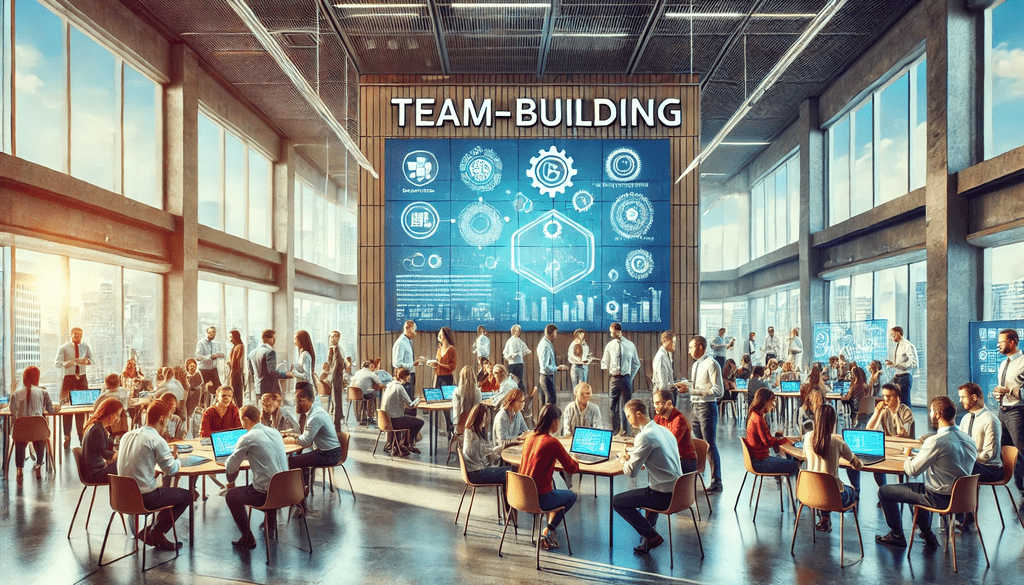
Enhancing Team Dynamics with Science and AI
Transforming team dynamics requires a purpose-driven approach. This article explores how advanced psychometrics and AI insights can cultivate high-performance organizational cultures.
Audience
General audience
Search intent
Editorial reference
Value
Lead gen n/a · Report reuse n/a
Related products
None
Legacy Journal
Enhancing Team Dynamics with Science and AI
The landscape of team development is undergoing a critical transition, moving away from subjective, traditional team-building methodologies toward more robust, evidence-based practices. As organizations navigate increasing complexity, the requirement for scientifically validated tools to manage human capital becomes paramount.
The landscape of team development is undergoing a critical transition, moving away from subjective, traditional team-building methodologies toward more robust, evidence-based practices. As organizations navigate increasing complexity, the requirement for scientifically validated tools to manage human capital becomes paramount.
The Integration of Psychometrics and AI
The modern organization requires a deeper understanding of human capability—the intersection of individual strengths, cognitive dispositions, and professional interests. By integrating structured psychometric assessment with AI-driven data analysis, leadership teams can move beyond descriptive management to predictive organizational engineering. This combination allows for a precise mapping of individual capability against team requirements, ensuring that workshops and development interventions are targeted and measurable.
Key Organizational Outcomes
- Dynamic Capability Optimization: Rather than focusing on static team roles, the integration of data allows teams to dynamic-load capabilities, fostering a collaborative environment that adapts to shifting operational needs.
- Communication Calibration: AI analysis can identify latent communication barriers, providing data-driven strategies to improve team discourse and minimize systemic friction.
- Constructive Conflict Resolution: Conflict in high-stakes environments is inevitable. Purpose-driven workshops utilize psychometric baselines to identify triggers, equipping teams with the tools to resolve friction constructively and maintain operational momentum.
- Leveraging Cognitive Diversity: Diversity of thinking styles is a strategic asset. By mapping cognitive profiles, organizations can ensure that teams are sufficiently diverse to solve complex, novel challenges, such as those presented in AI-enabled threat environments.
Transformative Interventions
The objective of purpose-driven workshops is to operationalize these insights. Whether through team-building exercises, remote team synchronization, or new hire orientation, these interventions must be focused on:
- Alignment: Syncing individual motivations with organizational goals.
- Engagement: Increasing job satisfaction and long-term commitment through perceived purpose.
- Repeatable Success: Establishing an organizational benchmark for collaborative performance that can be audited and refined over time.
Why This Matters for AI Security
AI security is an engineering discipline that requires high degrees of collaboration, transparency, and cognitive diversity. By institutionalizing these scientifically validated team-building methodologies, organizations create the organizational culture necessary to maintain robust control evidence and ensure the resilient governance of stochastic AI systems.
Note: Psychometric scores reflect behavioral dispositions and role-language signals, not absolute personality diagnoses. Implementation should focus on organizational alignment and capability.